
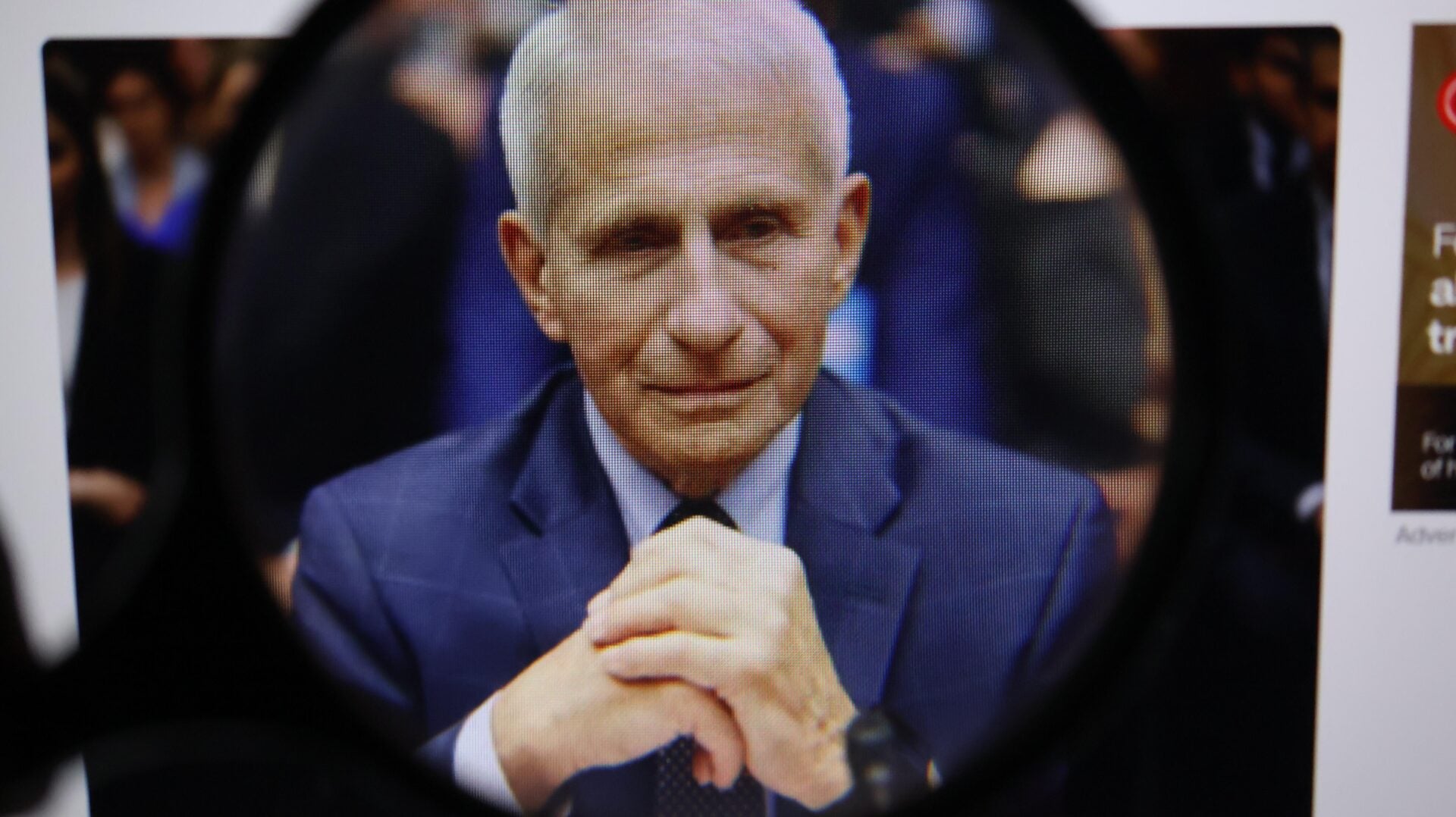
In July 2026, Dr. Anthony Fauci appeared before the Senate Homeland Security and Governmental Affairs Committee to answer questions about his actions before and during the response to COVID-19. Rather than answer questions, Fauci gave a statement and then invoked his Fifth Amendment right against self-incrimination. The majority on the Committee argued that his preemptive presidential pardon, granted by President Joe Biden in 2025, removed that right and will continue their proceedings, including possible referral to the Justice Department.
The power of the chief executive of a state to grant pardons is a tradition of Western Civilization and a constitutional power of President of the United States. It is meant to provide a check against the judicial and legislative branches, help address selective law enforcement, and give the president flexibility in extraordinary circumstances such as rebellion or secession. However, the use of that power can become a source of profound public disagreement, particularly when citizens believe a pardon has prevented accountability for serious wrongdoing. Historical examples include Gerald Ford’s pardon of Richard Nixon, Jimmy Carter’s pardon of Vietnam-war draft dodgers, and Donald Trump’s pardon of some January 6 defendants.
Our constitutional tradition does not require citizens to agree with every exercise of government authority, but it does require that disagreements be addressed through peaceful and lawful means. It is noteworthy that despite the seriousness of the accusations against Dr. Fauci and intense feelings on all sides, due process has advanced through our established institutions rather than through violence or personal retaliation. The willingness of citizens to pursue justice through legal means rather than violence demonstrates the strength, as well as the fragility, of a society committed to the rule of law.
Activity
Have students read the following sections of the Catechism of the Catholic Church, and then discuss the conversation questions.
The Duties of Civil Authorities
Conversation Questions
- What is a presidential pardon? What is a preemptive pardon?
- Do you think a state governor or the president might have prudent reasons for exercising his pardon power even when he believes the accused is guilty? Why or why not?
- Read the sections on the Catechism of the Catholic Church on the common good. Does it reflect any of the ideas in your answer to the question above?
- Does the rule of law require not only the power to punish wrongdoing, but also lawful mechanisms for mercy? Explain.
- How are each of the following individuals and groups affected by pardons?
- The convicted person
- The victim(s)
- The public
When it comes to the pursuit of justice, to what extent does a preemptive pardon differ from a pardon of someone who has been found guilty in a court of law? How are each of the following groups affected?
- The accused
- The alleged victim(s)
- The public
6. Read the duties of civil authorities from the Catechism of the Catholic Church (CCC 2235-2237) and write a brief reflection on how this teaching relates to this situation.
7. Read the duties of citizens from the Catechism of the Catholic Church (CCC 2238-2240) and write a brief reflection on how this teaching relates to this situation.
8. While a traditional power of the president, pardons can become a source of profound public disagreement, particularly when citizens believe a pardon has prevented accountability for serious wrongdoing. What does it reveal about a society when citizens can believe a grave injustice has occurred, and still choose lawful remedies rather than personal revenge or violence?
Extension Option:
Read the sections on the Catechism of the Catholic Church on the common good, and then research presidential pardons in American history from the following eras or others of your choosing. Why might each of these presidents have believed his action was serving the common good? From what you have learned, do you believe the common good was served in these situations? What would be the best arguments on each side?
- George Washington/The Whiskey Rebellion
- Andrew Johnson/Reconstruction
- Gerald Ford/Preemptive pardon of Richard Nixon
- Jimmy Carter/Pardon of draft evaders
Suggested Answers
- A pardon is an act of clemency, or legal forgiveness of a crime for which someone has been tried and convicted. A preemptive pardon is issued before a person has been convicted, preventing a trial from ever happening.
- Accept reasoned answers. Some students may say yes, for example, a state governor might pardon a convicted person he believes was guilty if he believes there were significant mitigating factors. As in the case of Gerald Ford’s preemptive pardon of Richard Nixon, the president may make a prudential decision that seeing the former president put through a trial would harm the common good more than a conviction would help it. Some students may say no, that chief executives should only exercise pardoning power in a case where he believes there was a wrongful conviction or, in the case of a preemptive pardon, where he is aware that the government is preparing a case against someone he believes to be innocent. Some students may say that the truth is always in the nation’s best interest and that therefore preemptive pardons which prevent criminal trials from taking place do not serve the common good.
- Accept reasoned answers.
- Accept reasoned answers. From a constitutional standpoint, the president’s power to grant pardons is a check against the powers of the judicial and legislative branches (and the executive branch if there had been selective law enforcement in a prior administration) within our system of checks and balances.
- In the case of a pardon, the convicted person is freed from paying his debt to society. Depending on the crime, victim and the public may lose their sense of closure or may feel a sense of injustice. In the case of a preemptive pardon, the accused person is protected from future prosecution. Depending on the situation, the alleged victim and the public may be denied the ability to know what actually happened, i.e. to see the prosecution make its case in a court of law. The truth may never come out because the question of the guilt or innocence of the pardoned person cannot be legally established.
- Answers should reflect an understanding that civil authorities are to act in service to the people, always acting justly with regard to the common good, and respecting the rights of all.
- Answers should reflect an understanding that citizens have a duty to respect legitimate authorities, follow the law, speak out against injustice, and contribute as they are able to the common good.
- It reveals that a society has faith in its institutions and is dedicated to living in peace under the rule of law. It reveals that citizens have internalized Fifth Commandment. Vengeance belongs to God alone, and justice in this world is not about anger or revenge. “Anger is a desire for revenge. To desire vengeance in order to do evil to someone who should be punished is illicit, but it is praiseworthy to impose restitution to correct vices and maintain justice” (CCC 2302).
