
- Advent is a time for waiting and for preparing for the coming of Jesus Christ, not only as a baby at Christmas, but also at the end of time in His promised Second Coming.
- The Nativity Scene is one of the most well-known symbols of Advent and Christmas.
- St. Francis of Assisi created the first Nativity Scene.
The Joy of Advent: Week 2 | Year A
Lesson Overview
Upper Elementary Lesson Materials
Download all PDFsConnection to the Catechism of the Catholic Church
- CCC 522-525
Vocabulary
- Nativity Scene
Biblical Touchstones
“Prepare the way of the Lord, make straight his paths.” - Matthew 3:3
And suddenly there was a multitude of the heavenly host with the angel, praising God and saying: “Glory to God in the highest and on earth peace to those on whom his favor rests.” - Luke 2:13-14
Lesson Plan
Warm Up
A. Using Teacher Resource: O Come, O Come, Emmanuel, project the lyrics to the hymn and teach your students the song. Then lead your students in singing the song together.
B. Distribute to your students Handout A: Teaching the Liturgical Year: Second Week of Advent. Have students read the Gospel passage, or read it aloud to your students, and then answer the focus questions. You may have students answer them on their own or you may discuss them together as a class.
C. When they have finished, review the correct answers to the focus questions.
D. Activity extension: If you have set up an Advent wreath and candles in your class, have a lighting ceremony of the first and second candles before reading the Gospel for this week.
Activity
A. Review with your students the signs and symbols of Advent they have learned about (the Advent wreath and candles, the Jesse Tree, and the Advent calendar). Review how these signs, symbols, and traditions help us reflect on and prepare for the coming of Christ. Then explain that one of the most well-known symbols of Advent and Christmas is the Nativity Scene.
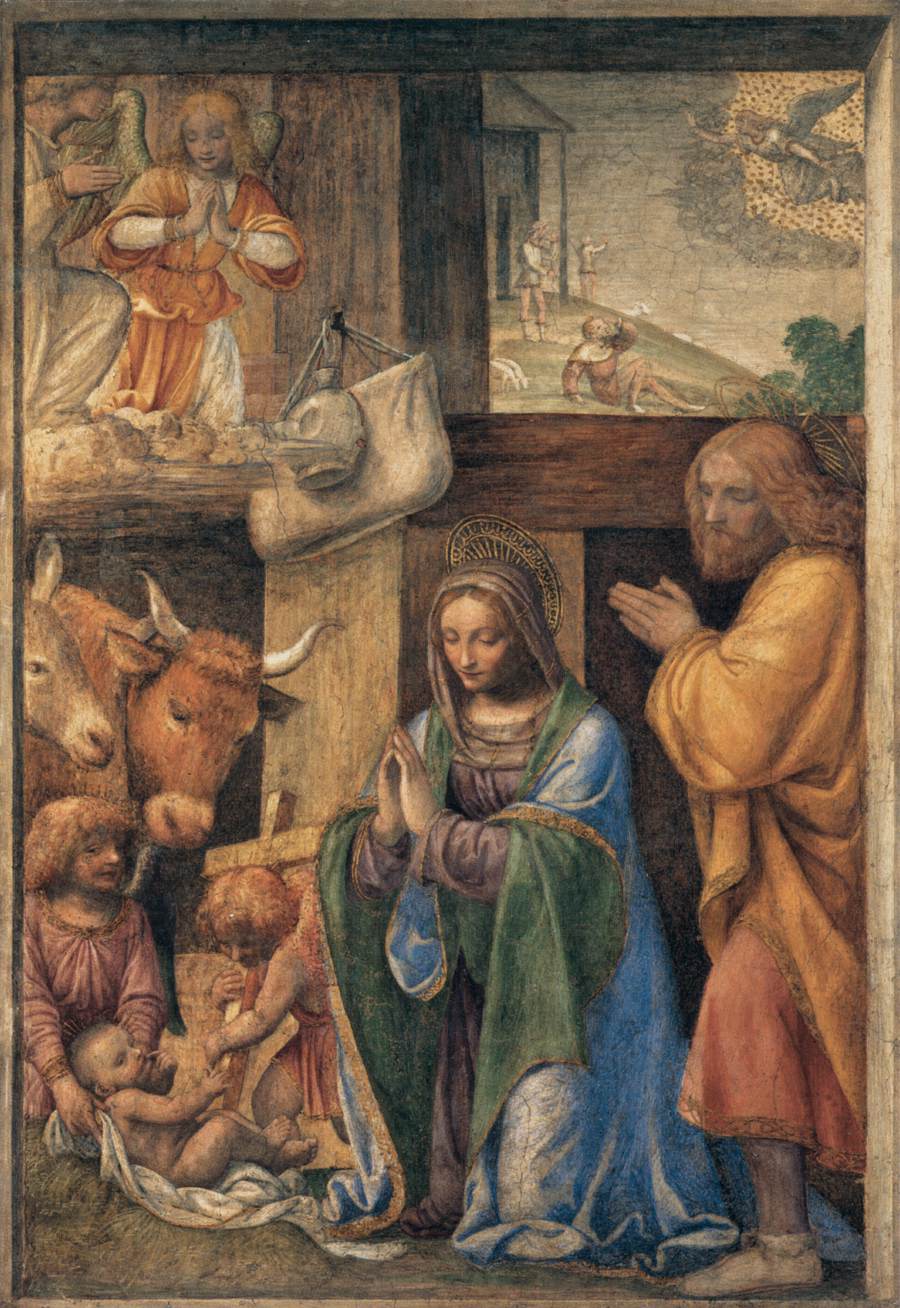
B. Distribute copies of Handout B: Nativity and Annunciation to the Shepherds by Bernardino Luini and/or project an image of the painting. Give your students a few moments to observe the painting, then ask the following questions:
- What stands out to you about this painting? Accept reasoned answers.
- What is happening in the painting? It is a painting of the Nativity of Jesus, or Jesus’ birth. In the background we see the angels announcing Jesus’ birth to the shepherds in the field.
- Who are the figures in the painting? Mary is in the front and center of the painting, with St. Joseph to her left (in yellow). To Mary’s right is the baby Jesus, surrounded by four angels, two on the ground with Him, and two above Him, looking down upon Him. There are also various animals from the stable present in the painting.
- What do you see surrounding the heads of Mary, Joseph, Jesus, and the angels? What do you think this means? Halos, which signify the holiness of the person.
- Look at the angel immediately to Mary’s right. What is he holding, and what does it look as if he is doing with it? What do you think this might mean? The angel is holding a small Cross. It looks as if he is giving the Cross to Jesus, who is reaching out to take it. This foreshadows how Jesus would later take up and carry the Cross and give His life on the Cross for our sins. In fact, this is one of the important reasons that God sent His Son to earth, to save us from sin.
- Read aloud to your students Luke 2:1-14 (the story of the birth of Jesus and the annunciation of His birth to the shepherds). Then ask your students how this painting illustrates this Gospel story. Would your students change anything or add something to the painting to illustrate the story better? Accept reasoned answers.
C. Explain the following to your students: St. Francis of Assisi is credited with creating the first Nativity Scene in 1223. On Christmas Eve, St. Francis invited his brother friars and the townspeople to a cave in Grecco, Italy. There he set up an empty manger, or a feeding trough for animals, surrounded by hay. He even brought in a live ox and a donkey! That night, in the cave, a Mass was celebrated with these symbols of Christ’s birth serving as a reminder of the poverty and humbleness of the way Christ came into the world. To this day, it is a tradition of the Franciscan religious order to have a Nativity Scene set up year-round as a constant reminder of Christ’s coming and of His poverty and humility. During Advent, the Nativity Scene is a visual way for us to contemplate the events of Christ’s birth and the coming of our Savior. It is traditional to leave the manger empty until Christmas Eve and then place a statue or representation of the Baby Jesus in the manger on the day of His birth.
Formative Assessment
A. Distribute to your students Handout C: Create Your Own Nativity Scene and make crayons, markers, and/or colored pencils available. Have your students color and cut out the various parts and assemble them into their own Nativity Scene (they can either tape or glue the pieces to the crèche). Remind your students to leave the manger empty until Christmas. Then, on Christmas, when we celebrate Jesus’ birth, they can add the cutout of the Baby Jesus. Encourage students to take their Nativity Scenes home to display them throughout the Advent and Christmas seasons (or year-round, as in the Franciscan tradition), or display them in your classroom.
B. Conclude by singing again “O Come, O Come, Emmanuel” as a class.
Answer Key
Handout A: Second Week of Advent
- He preached about the need for repentance in the desert of Judea, and baptized people in the Jordan River.
- Isaiah.
- “Prepare the way of the Lord” and “make straight his paths.”
- “He will baptize with the “Holy Spirit and fire.” Accept reasoned answers.
- Accept reasoned answers. Jesus, the Messiah and Son of God, will separate the sinners from the faithful and the unrepentant sinners will be burned in unquenchable fire, which we understand to be Hell.
Lower Elementary Lesson Materials
Download all PDFsConnection to the Catechism of the Catholic Church
- CCC 522-525
Vocabulary
- Nativity Scene
Biblical Touchstones
“Prepare the way of the Lord, make straight his paths.” - Matthew 3:3
And suddenly there was a multitude of the heavenly host with the angel, praising God and saying: “Glory to God in the highest and on earth peace to those on whom his favor rests.” - Luke 2:13-14
Lesson Plan
Warm Up
A. Using Teacher Resource: O Come, O Come, Emmanuel, project the lyrics to the hymn and teach your students the song. Then lead your students in singing the song together.
B. Distribute to your students Handout A: Teaching the Liturgical Year: Second Week of Advent. Read the Gospel passage aloud to your students as they follow along. Then discuss the focus and reflection questions with them as a class.
C. Activity extension: If you have set up an Advent wreath and candles in your class, have a lighting ceremony of the first and second candles before reading the Gospel for this week.
Activity
A. Review with your students the signs and symbols of Advent they have learned about (the Advent wreath and candles, the Jesse Tree, and the Advent calendar). Review how these signs, symbols, and traditions help us reflect on and prepare for the coming of Christ. Then explain that one of the most well-known symbols of Advent and Christmas is the Nativity Scene.
B. Distribute copies of Handout B: Nativity and Annunciation to the Shepherds by Bernardino Luini and/or project an image of the painting. Give your students a few moments to observe the painting, then ask the following questions:
- What stands out to you about this painting? Accept reasoned answers.
- What is happening in the painting? It is a painting of the Nativity of Jesus, or Jesus’ birth. In the background we see the angels announcing Jesus’ birth to the shepherds in the field.
- Who are the figures in the painting? Mary is in the front and center of the painting, with St. Joseph to her left (in yellow). To Mary’s right is the baby Jesus, surrounded by four angels, two on the ground with Him, and two above Him, looking down upon Him. There are also various animals from the stable present in the painting.
- What do you see surrounding the heads of Mary, Joseph, Jesus, and the angels? What do you think this means? Halos, which signify the holiness of the person.
- Look at the angel immediately to Mary’s right. What is he holding, and what does it look as if he is doing with it? What do you think this might mean? The angel is holding a small Cross. It looks as if he is giving the Cross to Jesus, who is reaching out to take it. This foreshadows how Jesus would later take up and carry the Cross and give His life on the Cross for our sins. In fact, this is one of the important reasons that God sent His Son to earth, to save us from sin.
- Read aloud to your students Luke 2:1-14 (the story of the birth of Jesus and the annunciation of His birth to the shepherds). Then ask your students how this painting illustrates this Gospel story. Would your students change anything or add something to the painting to illustrate the story better? Accept reasoned answers.
C. Explain the following to your students: St. Francis of Assisi is credited with creating the first Nativity Scene in 1223. On Christmas Eve, St. Francis invited his brother friars and the townspeople to a cave in Grecco, Italy. There he set up an empty manger, or a feeding trough for animals, surrounded by hay. He even brought in a live ox and a donkey! That night, in the cave, a Mass was celebrated with these symbols of Christ’s birth serving as a reminder of the poverty and humbleness of the way Christ came into the world. To this day, it is a tradition of the Franciscan religious order to have a Nativity Scene set up year-round as a constant reminder of Christ’s coming and of His poverty and humility. During Advent, the Nativity Scene is a visual way for us to contemplate the events of Christ’s birth and the coming of our Savior. It is traditional to leave the manger empty until Christmas Eve and then place a statue or representation of the Baby Jesus in the manger on the day of His birth.
Formative Assessment
A. Distribute to your students Handout C: Create Your Own Nativity Scene and make crayons, markers, and/or colored pencils available. Have your students color and cut out the various parts and assemble them into their own Nativity Scene (they can either tape or glue the pieces to the crèche). Remind your students to leave the manger empty until Christmas. Then, on Christmas, when we celebrate Jesus’ birth, they can add the cutout of the Baby Jesus. Encourage students to take their Nativity Scenes home to display them throughout the Advent and Christmas seasons (or year-round, as in the Franciscan tradition), or display them in your classroom.
B. Conclude by singing again “O Come, O Come, Emmanuel” as a class.
Answer Key
Handout A: Second Week of Advent
- “Repent, for the kingdom of heaven is at hand!”
- Isaiah.
- The Pharisees and Sadducees.
- With the Holy Spirit and fire.
