
Advent is a time for waiting and for preparing for the coming of Jesus Christ, not only as a baby at Christmas, but also at the end of time in His promised Second Coming.
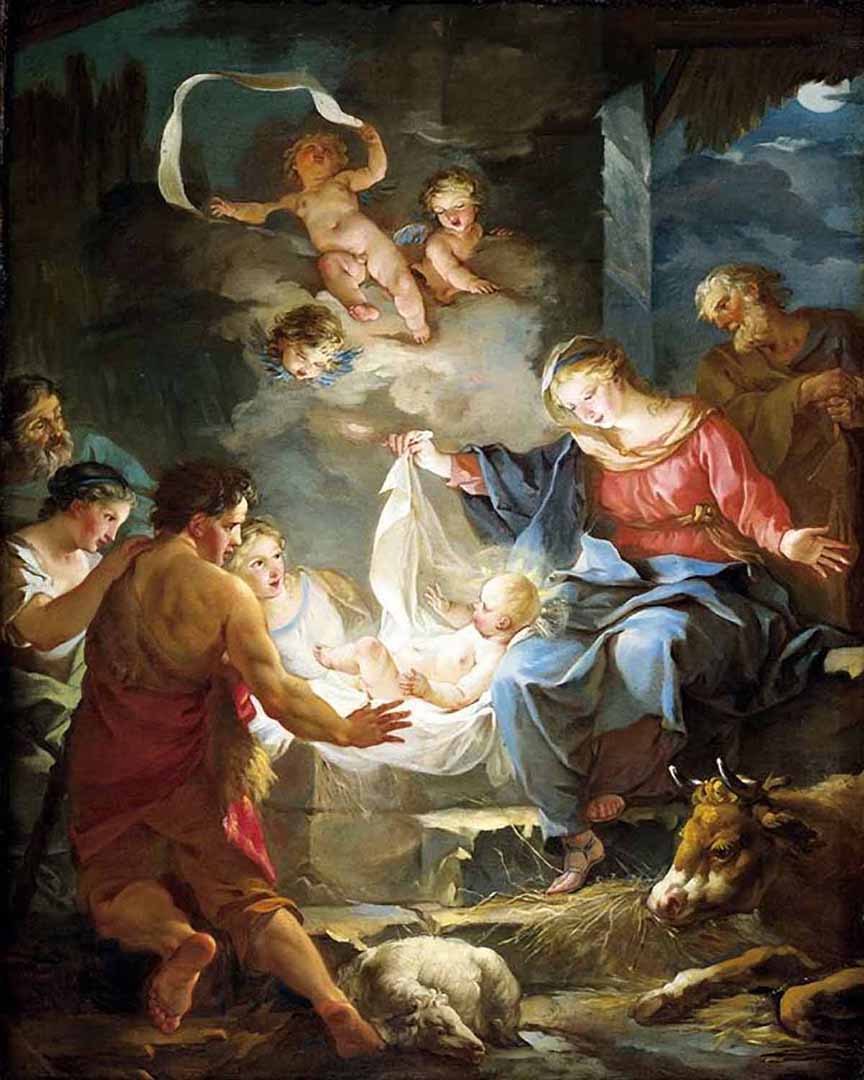
The Nativity Scene is one of the most well-known symbols of Advent and Christmas.
St. Francis of Assisi created the first Nativity Scene.

Connection to the Catechism of the Catholic Church
CCC 522-525
Vocabulary
Nativity Scene
Biblical Touchstones
“Behold, I am sending my messenger ahead of you; he will prepare your way. A Voice of one crying out in the desert: ‘Prepare the way of the Lord, make straight his paths.’” MARK 1:2-3
And suddenly there was a multitude of the heavenly host with the angel, praising God and saying: “Glory to God in the highest and on earth peace to those on whom his favor rests.” LUKE 2:13-14

Using Teacher Resource: O Come, O Come, Emmanuel, project the lyrics to the hymn and teach your students the song. Then lead your students in singing the song together.
Distribute to your students Handout A: Teaching the Liturgical Year: Second Week of Advent. Have students read the Gospel passage, or read it aloud to your students, and then answer the focus questions. You may have students answer them on their own or you may discuss them together as a class.
When they have finished, review the correct answers to the focus questions.
Activity extension: If you have set up an Advent wreath and candles in your class, have a lighting ceremony of the first and second candles before reading the Gospel for this week.
Activity
Review with your students the signs and symbols of Advent they have learned about (the Advent wreath and candles, the Jesse Tree, and the Advent calendar). Review how these signs, symbols, and traditions help us reflect on and prepare for the coming of Christ. Then explain that one of the most well-known symbols of Advent and Christmas is the Nativity Scene.
Distribute copies of Handout B: Nativity and Annunciation to the Shepherds by Bernardino Luini and/or project an image of the painting. Give your students a few moments to observe the painting, then ask the following questions:
What stands out to you about this painting? Accept reasoned answers.
What is happening in the painting? It is a painting of the Nativity of Jesus, or Jesus’ birth. In the background we see the angels announcing Jesus’ birth to the shepherds in the field.
Who are the figures in the painting? Mary is in the front and center of the painting, with St. Joseph to her left (in yellow). To Mary’s right is the baby Jesus, surrounded by four angels, two on the ground with Him, and two above Him, looking down upon Him. There are also various animals from the stable present in the painting.
What do you see surrounding the heads of Mary, Joseph, Jesus, and the angels? What do you think this means? Halos, which signify the holiness of the person.
Look at the angel immediately to Mary’s right. What is he holding, and what does it look as if he is doing with it? What do you think this might mean? The angel is holding a small Cross. It looks as if he is giving the Cross to Jesus, who is reaching out to take it. This foreshadows how Jesus would later take up and carry the Cross and give His life on the Cross for our sins. In fact, this is one of the important reasons that God sent His Son to earth, to save us from sin.
Read aloud to your students Luke 2:1-14 (the story of the birth of Jesus and the annunciation of His birth to the shepherds). Then ask your students how this painting illustrates this Gospel story. Would your students change anything or add something to the painting to illustrate the story better? Accept reasoned answers.
Explain the following to your students: St. Francis of Assisi is credited with creating the first Nativity Scene in 1223. On Christmas Eve, St. Francis invited his brother friars and the townspeople to a cave in Grecco, Italy. There he set up an empty manger, or a feeding trough for animals, surrounded by hay. He even brought in a live ox and a donkey! That night, in the cave, a Mass was celebrated with these symbols of Christ’s birth serving as a reminder of the poverty and humbleness of the way Christ came into the world. To this day, it is a tradition of the Franciscan religious order to have a Nativity Scene set up year-round as a constant reminder of Christ’s coming and of His poverty and humility. During Advent, the Nativity Scene is a visual way for us to contemplate the events of Christ’s birth and the coming of our Savior. It is traditional to leave the manger empty until Christmas Eve and then place a statue or representation of the Baby Jesus in the manger on the day of His birth.
Formative Assessment
Distribute to your students Handout C: Create Your Own Nativity Scene and make crayons, markers, and/or colored pencils available. Have your students color and cut out the various parts and assemble them into their own Nativity Scene (they can either tape or glue the pieces to the crèche). Remind your students to leave the manger empty until Christmas. Then, on Christmas, when we celebrate Jesus’ birth, they can add the cutout of the Baby Jesus. Encourage students to take their Nativity Scenes home to display them throughout the Advent and Christmas seasons (or year-round, as in the Franciscan tradition), or display them in your classroom.
Conclude by singing again “O Come, O Come, Emmanuel” as a class.
Answer Key
Handout A: Teaching the Liturgical Year: Second Week of Advent
To prepare the way for Christ, to call people to repentance and model humility.
To fulfill the prophecy in Isaiah. God sends John the Baptist to more fully soften the people’s hearts and ready them to receive His Son. God has already been doing this throughout Salvation History with the other prophets. John the Baptist is given the task of being the final prophet and the bridge between the Old and New Covenants.
This passage is all about John the Baptist preparing the people for the one who is coming after him: Jesus. Advent is a time for us to prepare for Christmas. This passage helps us to reflect on what is necessary for us to welcome Christ into our hearts and homes at Christmas: repentance, reconciliation, and the humility to seek those dispositions. Accept additional reasoned answers.
Warm Up
Using Teacher Resource: O Come, O Come, Emmanuel, project the lyrics to the hymn and teach your students the song. Then lead your students in singing the song together.
Distribute to your students Handout A: Teaching the Liturgical Year: Second Week of Advent. Read the Gospel passage aloud to your students as they follow along. Then discuss the focus and reflection questions with them as a class.
Activity extension: If you have set up an Advent wreath and candles in your class, have a lighting ceremony of the first and second candles before reading the Gospel for this week.
Activity
Review with your students the signs and symbols of Advent they have learned about (the Advent wreath and candles, the Jesse Tree, and the Advent calendar). Review how these signs, symbols, and traditions help us reflect on and prepare for the coming of Christ. Then explain that one of the most well-known symbols of Advent and Christmas is the Nativity Scene.
Distribute copies of Handout B: Nativity and Annunciation to the Shepherds by Bernardino Luini and/or project an image of the painting. Give your students a few moments to observe the painting, then ask the following questions:
What stands out to you about this painting? Accept reasoned answers.
What is happening in the painting? It is a painting of the Nativity of Jesus, or Jesus’ birth. In the background we see the angels announcing Jesus’ birth to the shepherds in the field.
Who are the figures in the painting? Mary is in the front and center of the painting, with St. Joseph to her left (in yellow). To Mary’s right is the baby Jesus, surrounded by four angels, two on the ground with Him, and two above Him, looking down upon Him. There are also various animals from the stable present in the painting.
What do you see surrounding the heads of Mary, Joseph, Jesus, and the angels? What do you think this means? Halos, which signify the holiness of the person.
Look at the angel immediately to Mary’s right. What is he holding, and what does it look as if he is doing with it? What do you think this might mean? The angel is holding a small Cross. It looks as if he is giving the Cross to Jesus, who is reaching out to take it. This foreshadows how Jesus would later take up and carry the Cross and give His life on the Cross for our sins. In fact, this is one of the important reasons that God sent His Son to earth, to save us from sin.
Read aloud to your students Luke 2:1-14 (the story of the birth of Jesus and the annunciation of His birth to the shepherds). Then ask your students how this painting illustrates this Gospel story. Would your students change anything or add something to the painting to illustrate the story better? Accept reasoned answers.
Explain the following to your students: St. Francis of Assisi is credited with creating the first Nativity Scene in 1223. On Christmas Eve, St. Francis invited his brother friars and the townspeople to a cave in Grecco, Italy. There he set up an empty manger, or a feeding trough for animals, surrounded by hay. He even brought in a live ox and a donkey! That night, in the cave, a Mass was celebrated with these symbols of Christ’s birth serving as a reminder of the poverty and humbleness of the way Christ came into the world. To this day, it is a tradition of the Franciscan religious order to have a Nativity Scene set up year-round as a constant reminder of Christ’s coming and of His poverty and humility. During Advent, the Nativity Scene is a visual way for us to contemplate the events of Christ’s birth and the coming of our Savior. It is traditional to leave the manger empty until Christmas Eve and then place a statue or representation of the Baby Jesus in the manger on the day of His birth.
Formative Assessment
Distribute to your students Handout C: Create Your Own Nativity Scene and make crayons, markers, and/or colored pencils available. Have your students color and cut out the various parts and assemble them into their own Nativity Scene (they can either tape or glue the pieces to the crèche). Remind your students to leave the manger empty until Christmas. Then, on Christmas, when we celebrate Jesus’ birth, they can add the cutout of the Baby Jesus. Encourage students to take their Nativity Scenes home to display them throughout the Advent and Christmas seasons (or year-round, as in the Franciscan tradition), or display them in your classroom.
Conclude by singing again “O Come, O Come, Emmanuel” as a class.
Answer Key
Handout A: Teaching the Liturgical Year: Second Week of Advent
To prepare the way for Christ, and to call people to repentance and humility.
Accept reasoned answers. In order to fulfill the prophecy of Isaiah, God sent John the Baptist to soften people’s hearts and ready them to receive Christ.
He said “he will baptize you with the Holy Spirit.”
We use cookies to improve your experience on our site. By using our site, you consent to cookies.
This website uses cookies
Websites store cookies to enhance functionality and personalise your experience. You can manage your preferences, but blocking some cookies may impact site performance and services.
Essential cookies enable basic functions and are necessary for the proper function of the website.
Name
Description
Duration
Cookie Preferences
This cookie is used to store the user's cookie consent preferences.
30 days
Google Tag Manager simplifies the management of marketing tags on your website without code changes.
Name
Description
Duration
cookiePreferences
Registers cookie preferences of a user
2 years
td
Registers statistical data on users' behaviour on the website. Used for internal analytics by the website operator.
session
Statistics cookies collect information anonymously. This information helps us understand how visitors use our website.
Google Analytics is a powerful tool that tracks and analyzes website traffic for informed marketing decisions.
ID used to identify users for 24 hours after last activity
24 hours
_gat
Used to monitor number of Google Analytics server requests when using Google Tag Manager
1 minute
_gac_
Contains information related to marketing campaigns of the user. These are shared with Google AdWords / Google Ads when the Google Ads and Google Analytics accounts are linked together.
90 days
__utma
ID used to identify users and sessions
2 years after last activity
__utmt
Used to monitor number of Google Analytics server requests
10 minutes
__utmb
Used to distinguish new sessions and visits. This cookie is set when the GA.js javascript library is loaded and there is no existing __utmb cookie. The cookie is updated every time data is sent to the Google Analytics server.
30 minutes after last activity
__utmc
Used only with old Urchin versions of Google Analytics and not with GA.js. Was used to distinguish between new sessions and visits at the end of a session.
End of session (browser)
__utmz
Contains information about the traffic source or campaign that directed user to the website. The cookie is set when the GA.js javascript is loaded and updated when data is sent to the Google Anaytics server
6 months after last activity
__utmv
Contains custom information set by the web developer via the _setCustomVar method in Google Analytics. This cookie is updated every time new data is sent to the Google Analytics server.
2 years after last activity
__utmx
Used to determine whether a user is included in an A / B or Multivariate test.
18 months
_ga
ID used to identify users
2 years
_gali
Used by Google Analytics to determine which links on a page are being clicked
30 seconds
_ga_
ID used to identify users
2 years
SourceBuster is used by WooCommerce for order attribution based on user source.
Name
Description
Duration
sbjs_session
The number of page views in this session and the current page path
30 minutes
sbjs_udata
Information about the visitor’s user agent, such as IP, the browser, and the device type
session
sbjs_first
Traffic origin information for the visitor’s first visit to your store (only applicable if the visitor returns before the session expires)
session
sbjs_current
Traffic origin information for the visitor’s current visit to your store
session
sbjs_first_add
Timestamp, referring URL, and entry page for your visitor’s first visit to your store (only applicable if the visitor returns before the session expires)
session
sbjs_current_add
Timestamp, referring URL, and entry page for your visitor’s current visit to your store
session
sbjs_migrations
Technical data to help with migrations between different versions of the tracking feature
By creating an account, you agree to receive personalized emails (e.g., event reminders, free resources, & more) from Sophia Teachers at the email address provided. Consent is not a condition of any purchase. View Terms & Privacy.