
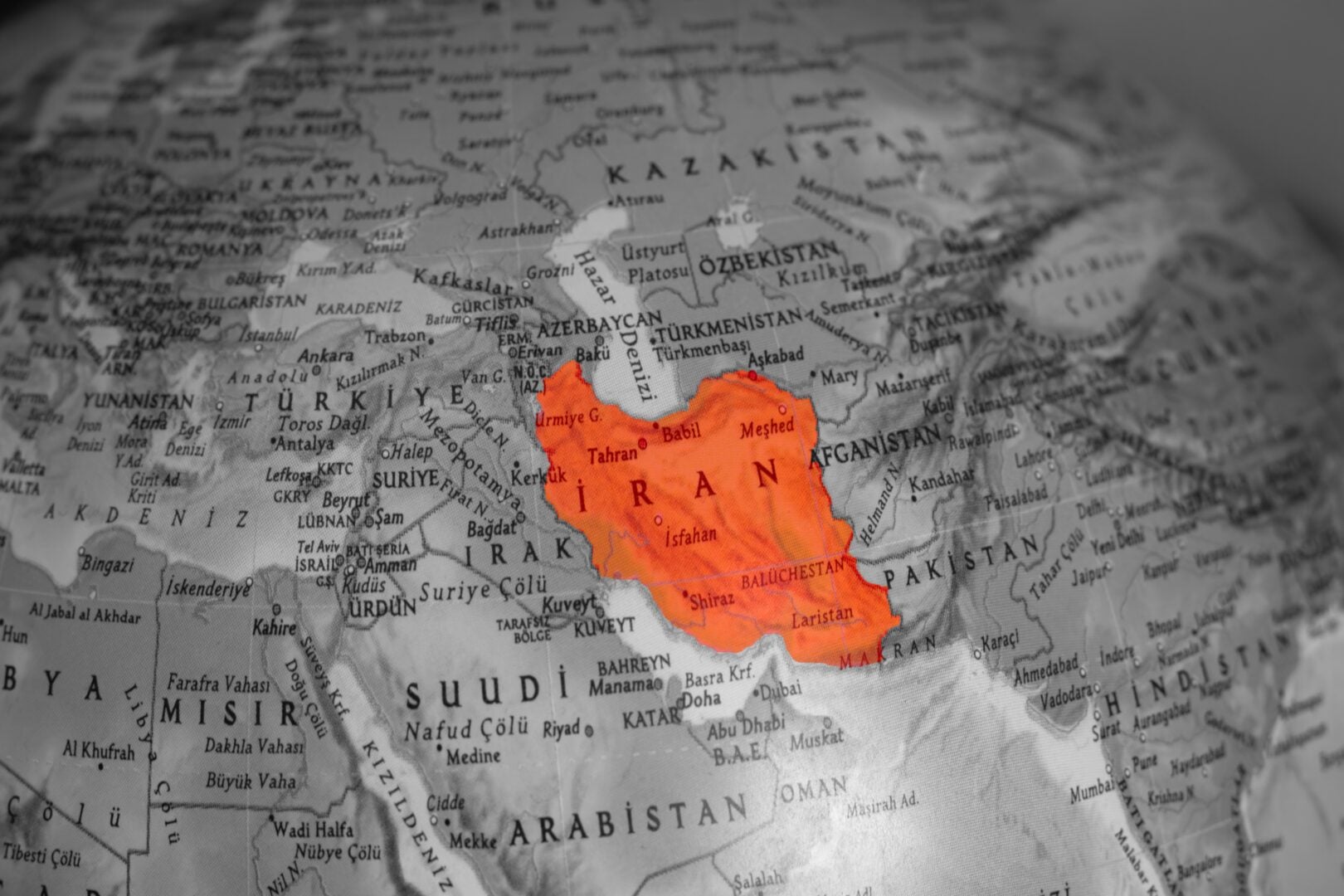
The United States and Israel have carried out coordinated airstrikes and bombardments across multiple Iranian cities and strategic sites. Targets include military bases, security installations, ballistic missile infrastructure, and government facilities. President Trump’s justification for the strikes centers on preventing Iran from obtaining nuclear weapons and dismantling its ballistic missile capabilities; Secretary of State Marco Rubio explained that protecting the US from retaliatory strikes also played a role: “We knew that there was going to be an Israeli action. We knew that that would precipitate an attack against American forces, and we knew that if we didn’t pre-emptively go after them before they launched those attacks, we would suffer higher casualties.”
Iran’s Supreme Leader Ayatollah Ali Khamenei was killed and Tehran’s government is in the process of selecting a successor leader. Iranian authorities report hundreds of deaths and thousands of injuries from the strikes, including significant civilian casualties. Hospitals, schools, and other civilian infrastructure are reported damaged. In response, Tehran has fired missiles and drones at Israel, U.S. military bases across the Gulf region (including at facilities in Gulf states), and military and civilian targets in U.S. allied and other Middle Eastern and European nations. Iran has also issued warnings of targeting deeper strategic points such as nuclear sites if foreign forces seek regime change
From what citizens have been told, does this intervention meet the criteria for a just war? How does the U.S. Constitution divide the nation’s war powers? Would adherence to the Constitution be more likely to result in fewer wars and, when they do happen, in more wars that are just?
Activity
First, have your students read Catechism no. 2309 and answer the focus question. Then, arrange your students into groups of three or four. Have them discuss what they have learned about just war from the Catechism and apply it to the current situation in Iran using the discussion questions below.
Focus Question
Read Catechism no. 2309:
The strict conditions for legitimate defense by military force require rigorous consideration. The gravity of such a decision makes it subject to rigorous conditions of moral legitimacy. At one and the same time:
- the damage inflicted by the aggressor on the nation or community of nations must be lasting, grave, and certain;
- all other means of putting it to an end must have been shown to be impractical or ineffective;
- there must be serious prospects of success;
- the use of arms must not produce evils and disorders graver than the evil to be eliminated.
The power of modern means of destruction weighs very heavily in evaluating this condition. These are the traditional elements enumerated in what is called the “just war” doctrine. The evaluation of these conditions for moral legitimacy belongs to the prudential judgment of those who have responsibility for the common good.
- What are the four criteria of just war?
Discussion Questions
- Should the United States use military force in conflicts around the world if there is no direct threat to our nation? If so, to what extent?
- Think back to the four criteria for just war from the Catechism. What questions would you need answered about the situation in Iran in order to determine whether it fits into those criteria?
- The U.S. Constitution grants the power to wage war to the president, while reserving the power to declare war to Congress. When was the last time the U.S. was engaged in a war? In this last century, how many wars has the U.S. been in?
- How many times has the U.S. declared war? When was the last time that Congress exercised its power to declare war?
- The Framers of the U.S. Constitution designated a single person as commander in chief – the president – because war cannot effectively be managed by committee. Quick, energetic, executive action is more suited to waging war. On the other hand, the power to declare war was given to Congress. Why do you think the Framers made this decision? Do you think that adherence to the Constitution would result in fewer wars and, when they do happen, in fewer wars that are unjust?
- A “conditional hypothetical”, or “counter-factual subjunctive” statement is something like “If I had not done X, the outcome of Y would have been worse.” These types of statements can sometimes be heard from government officials in various contexts. Can conditional hypotheticals be used to truly justify actions? Why or why not?
Focus Question Answer Key
- From the Catechism: At one and the same time: the damage inflicted by the aggressor on the nation or community of nations must be lasting, grave, and certain; all other means of putting an end to it must have been shown to be impractical or ineffective; there must be serious prospects of success; and the use of arms must not produce evils and disorders graver than the evil to be eliminated. The power of modern means of destruction weighs very heavily in evaluating this condition. These are the traditional elements enumerated in what is called the “just war” doctrine.
Discussion Questions Answer Key
- Accept reasoned answers. Paragraph 2309 of the Catechism explains that “the evaluation of these conditions for moral legitimacy belongs to the prudential judgment of those who have responsibility for the common good.” Government leaders are likely to have more complete information than are most citizens. This does not, of course, mean that their determinations are always wise or legitimate.
- Accept reasoned answers.
- The U.S. has fought in approximately 10–15 major wars typically recognized in academic and military analysis: World War II, the Korean War, the Vietnam War, the Persian Gulf War, the War in Afghanistan, the Iraq War; plus sustained combat operations in Lebanon, Somalia, Libya, Syria, and ongoing operations in what has been known as the War on Terror.
- The U.S. has formally declared war 11 times in our entire history. We have not declared war since 1942 (despite being in near-constant war).
- Legislators are expected to be closer to, and more directly accountable, to the people of their state. Requiring senators and representatives from all the states to agree that the nation should go to war seems meant to ensure there is something approaching a national consensus when our armed forces are sent to war. Accept reasoned answers.
- Accept reasoned answers.
