
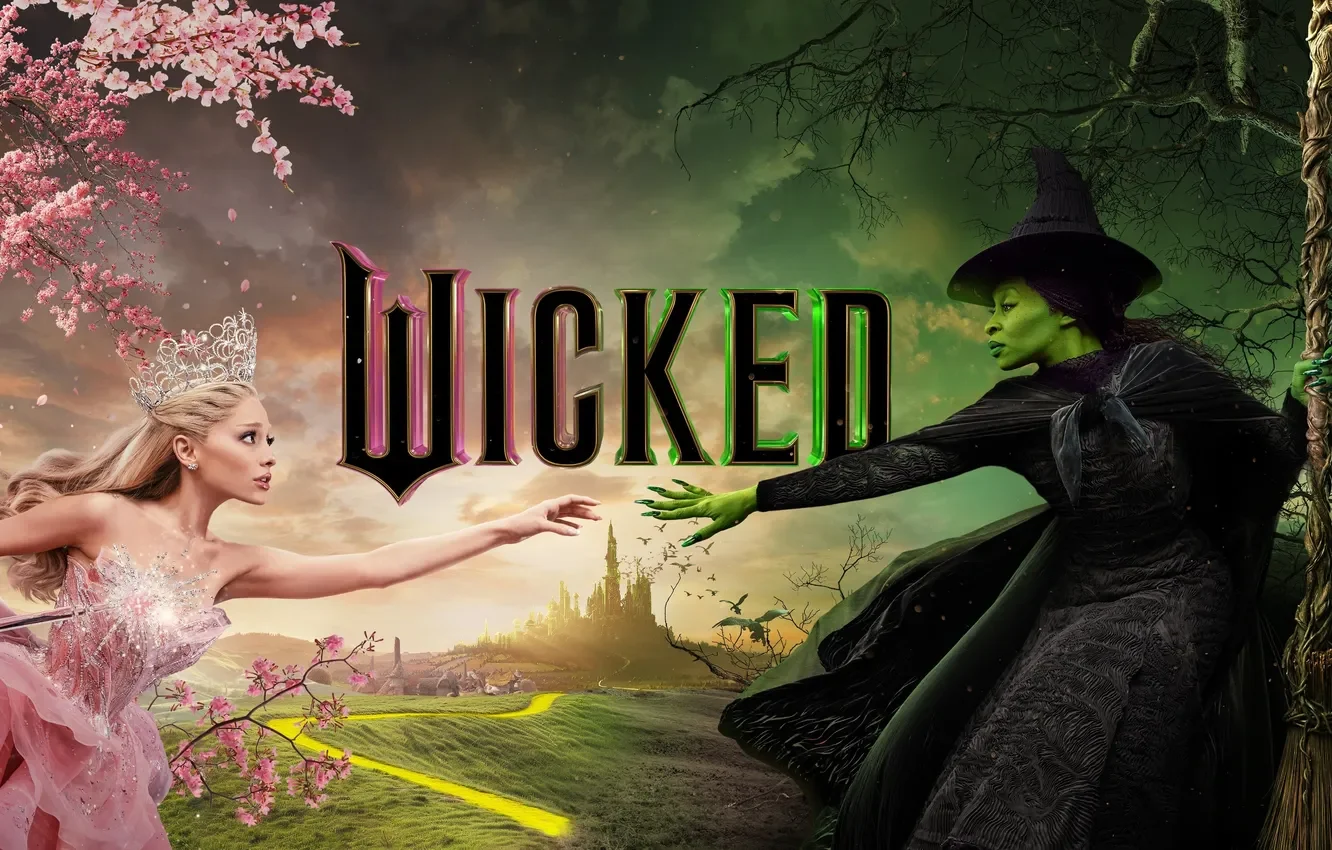
In 2003, the novel Wicked: The Life and Times of the Wicked Witch of the West, a fan-fiction-like sympathetic backstory for the villain of The Wizard of Oz, was adapted into a hugely successful Broadway musical named Wicked: The Untold Story of the Witches of Oz. Recently, that stage production was adapted into a lavish, big-budget, two-part movie musical. One theme of the movie is friendship. Near the end of the second film, the main characters, Glinda and Elphaba, sing about how their friendship has changed them “for good” — meaning they believe their friendship has helped them to “be good” (as in “to grow in virtue,”), and that this change is “for good” (as in “permanent”). In this eLesson, students will learn about the true meaning of goodness and friendship.
Your students will explore:
- How should we choose our friends?
- How are we formed by those we spend the most time with?
- What is the real meaning of friendship?
Important Note: Especially since the film has captured much attention and your students may have seen it, this eLesson is intended to provide talking points and a short activity for responding to students’ unprompted comments or questions about the film. It is NOT meant to imply endorsement of the movie or a recommendation to introduce it in class. This resource also contains talking points on how Catholics should approach witchcraft-themed movies.
Conversation and Reflection Questions
1. Aristotle says there are three types of friendship: Friendships of pleasure; Friendships of usefulness; and Friendships of virtue (the highest). What examples of friendships of pleasure and friendships of usefulness are there in the Wicked movie? Which kind of friendship do Elphaba and Glinda have? Does their friendship grow into a friendship of virtue? What evidence, if any, shows they help each other grow morally?
Allow reasoned discussion. Examples may include the relationship between Glinda and Fiyero, Glinda and Boq, (or arguably all of Glinda’s relationships prior to her friendship with Elphaba, which was her first true friendship). While it was not reciprocated, Elphaba loved her sister selflessly and this love was a source of virtue in her life. As the story goes on, Elphaba and Glinda begin to challenge and shape each other’s character for the better: Elphaba pushes Glinda to care about justice rather than just popularity, and Glinda helps Elphaba trust others and soften her defensiveness. By the end of the story, they both recognize they’ve been morally changed, not just entertained or helped.
2. Building on Aristotle, St. Augustine wrote about how good friends turn your heart toward God and virtue, while bad ones pull your heart toward disorder. Do Elphaba and Glinda help each other love the right things? Where do they mislead each other?
Allow reasoned discussion. On one hand, Elphaba helps Glinda love the right things. She pushes Glinda to care about justice instead of popularity. For example, when Elphaba refuses to support the Wizard’s cruelty toward the animals, Glinda starts to question her own desire to “fit in” and begins choosing truth over approval. But on the other hand, they sometimes mislead each other. Glinda encourages Elphaba to pursue the Wizard’s favor and to hide her true self, valuing status over integrity. By the end of the first movie, they part in order to pursue their ends from a place of isolation. The second movie deals with the consequences of their decisions, which only led to more isolation, pain, fear, and failure. Elphaba’s final actions, while intended to make up for her mistakes, are based on deception and the idea that the ends (Glinda’s banishing of the Wizard and imprisonment of Madame Morrible) justify the means (lies and deception).
3. In what ways do Glinda and Elphaba each display virtue? In what ways do they fall short?
Elphaba works to fix her mistakes, calls out deception and lies, and cares for the marginalized. Glinda has a sincere desire to make others happy, and in the end, exposes corruption and sacrifices for Elphaba. Both fall short by giving into fear rather than pursuing truth and justice. While both have good intentions and desires, they pursue them incorrectly. (There is more on this topic in the next question). Accept additional reasoned answers.
4. While Elphaba is concerned with justice, does she pursue it correctly?
No. Elphaba’s desire for justice is sincere, but she does not pursue it correctly. Justice must always be joined to charity and humility and must be pursued through morally good means. While Elphaba rightly recognizes the oppression of the animals and refuses to participate in evil, she often responds with anger, isolation, and lawlessness. Her intentions are noble, but her methods: acting alone, rejecting guidance, using deceptive means, and using her power in impulsive ways, lack the virtues that make justice complete. Justice is not just fighting for the right cause but doing so in a way that reflects God’s order, honors the dignity of all persons, and avoids evil means. Elphaba’s heart is in the right place, but her approach shows the danger of pursuing justice without the other virtues that help guide it.
5. The finale asserts that Glinda and Elphaba’s friendship changed them “for good.” Does the ending show Aristotle’s highest form of friendship — one rooted in virtue and mutual transformation? Why or why not?
Allow reasoned discussion. Some students may say that by the end, both Glinda and Elphaba choose sacrifice over self-interest: Glinda takes on the burden of leadership, and Elphaba gives up her reputation so Glinda can restore justice. They each acknowledge how they believe the other has made them better. That willingness to seek what they believe is the true good for the other is the highest form of friendship.
Other students may say the ending does not show a virtuous friendship. Although they express affection, their choices are still marked by secrecy, deception, and unresolved conflicts. A “sacrifice” must be rooted in truth, whereas Elphaba’s staged death is a lie and leaves Glinda burdened and isolated. Glinda’s political choices remain tied to image and public approval. Instead of mutually pursuing the good together, they split apart and avoid true reconciliation and truth. Guide students to the clear understanding that the ends never justify the means.
6. St. Augustine believed that our friends shape us profoundly. When we spend a lot of time with a person, we will be drawn toward what they love, whether that is good or evil. When our friends love what is true, just, and ordered toward God, they lift us with them, and our souls grow in virtue. But when they love lesser things like status, pleasure, or sin, they pull our hearts into disorder as well. The greatest gift friends give is to help us desire what is eternal and to turn us away from what harms us. Which friendships in your life help you desire the eternal rather than here comfort? What can you do to cultivate more true friendships?
A friendship that helps us grow in virtue is one where the other person does not just affirm or entertain us but challenges us to be who God made us to be: saints. They challenge us to do good and avoid evil. They help us be honest, patient and kind, and courageous. To cultivate more friendships like this we can be intentional about honesty, ask deeper questions, and look for friends who care about what is right rather than what is popular or fun. Our true good is ending up in Heaven. So, choosing friends who want to get to Heaven makes virtuous friendship possible.
Extension Questions for Older Students
1. How do films like Wicked, Cruella, Maleficent, Shrek, and other postmodern movies differ from traditional children’s literature when it comes to conscience formation and moral imagination?
Guide the discussion to help students understand that the Wicked franchise, like many other post-modern films aimed at children, asserts that those we believe to be evil are actually good. Beauty and ugliness are also inverted — ogres are “beautiful” and the audience’s natural expectation that “love’s true form” would look beautiful is subverted. The audience is told that that scheming, murderous villains, in reality, deserve our sympathy because they were oppressed, marginalized, or fighting on behalf of the powerless. The ultimate message is that all of us, but most especially children, should question and even feel guilty for our God-given ability to discern good and evil.
2. Why do you think there is such a temptation in our modern culture to “re-write” the stories of classic literature or movie villains to make them “good,” or, in the very least, morally ambiguous?
Accept reasoned answers.
Talking Points: How should Catholics approach films where characters we are supposed to admire practice witchcraft?
Witchcraft-themed movies should be approached with caution or avoided entirely because they can blur the line between fantasy and practices the Church identifies as spiritually dangerous. Seeking supernatural power apart from God through magic, spells, or occult practices is gravely contrary to the First Commandment (CCC 2116–2117). Even when presented as entertainment, these stories subtly normalize the idea that power comes from manipulating hidden forces rather than trusting in God’s providence.
The concern is not imaginary creatures or fairy-tale magic, but portrayals that glamorize sorcery, divination, or attempts to control spiritual realities. These themes can dull our sensitivity to the spiritual world — which, while invisible, is very real — and make harmful and dangerous practices seem harmless or even admirable.
Ultimately, as Catholics, we are encouraged to choose media that helps us grow in virtue, strengthens our imagination toward the good, and does inspire curiosity about the occult. Families should use prudence, recognizing that some fantasy is harmless, but anything that depicts witchcraft as empowering, heroic, or a source of real spiritual power is best avoided.
